
Owning the Lake: The Women Rewriting the Rules of Aquaculture
For generations of women living along the shores of Lake Victoria, economic survival in the fishing industry often meant navigating a deeply entrenched system of exploitation. Wida Akinyi, a resident of Mulukoba Beach in Busia County, knows this harsh reality firsthand. As a member of the Bukani Mama Toto Group, Wida experienced a restrictive culture that deliberately kept women away from direct production, forcing them to rely on the “Jaboya” system just to secure fish for basic trading.
“We were completely at their mercy, there was a culture where you could not even buy fish to sell unless you traded your dignity with the boat owners. We were kept at the absolute bottom, with no voice and no way out,” Wida recalls.
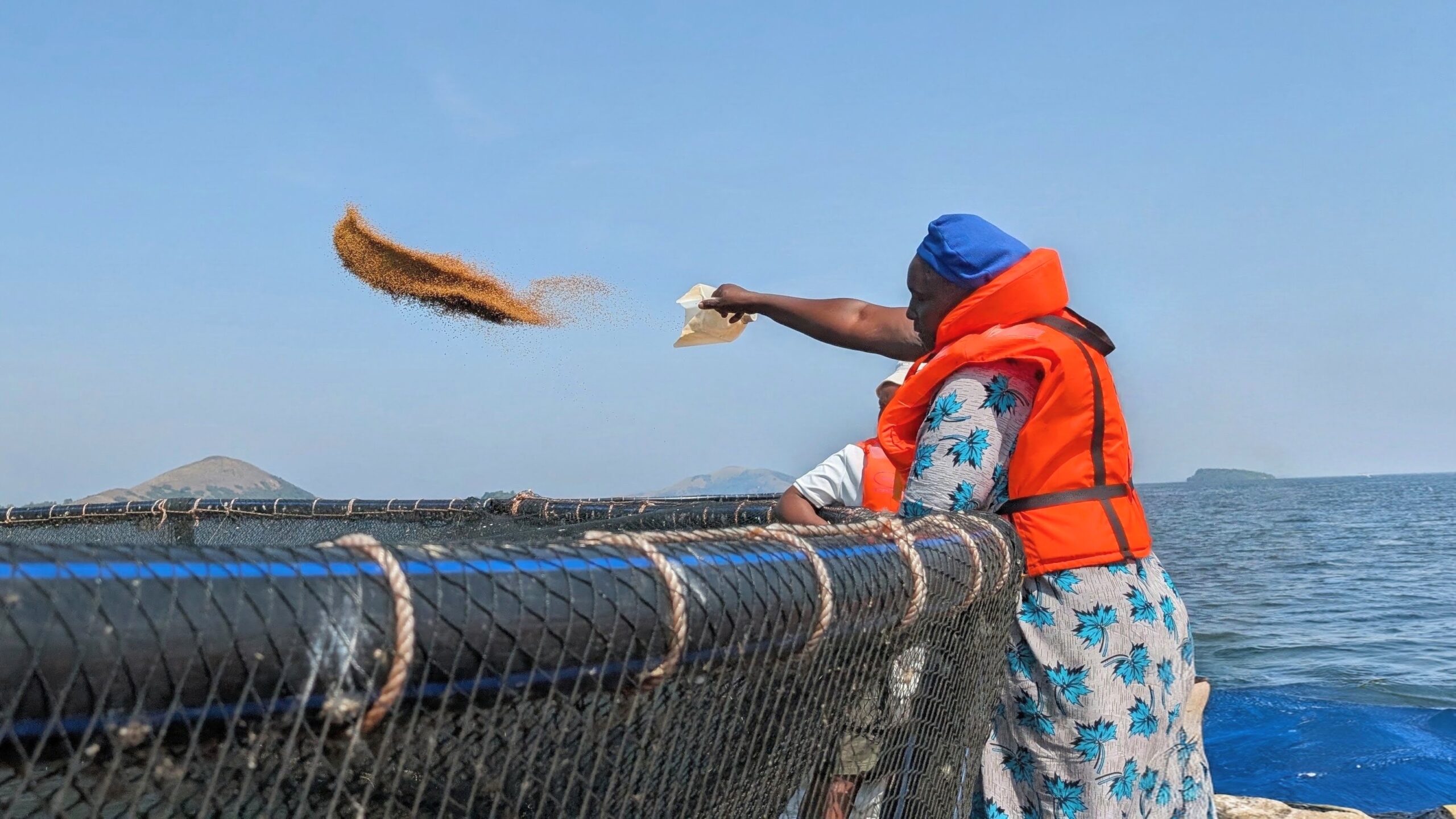
The turning point for Wida and her community arrived through the Youth in Sustainable Aquaculture (YISA) program. This initiative provided the Bukani Mama Toto Group, a women-led aquaculture enterprise, with the critical infrastructure needed to transition from vulnerable traders to empowered cage fish farmers.
“When the Youth in Sustainable Aquaculture program arrived, it rewrote our story,” Wida explains. “Through KES 4.5 million revolving loan fund, we received a 28-foot boat, quality feeds, and fingerlings. We were finally given the power to farm our own fish and control our own destiny.”
This KES 4.5 million investment was more than just funding; it was a complete toolkit for commercial independence. To ensure the women could command the waters safely and competitively, they were equipped with heavy infrastructure, including a secure fish cage fitted with reflectors, a motorized engine boat, and modern tools like solar lighting, oxygen meters, and a CCTV system.
Beyond the hardware, the initiative breathed life into their new enterprise by supplying 35,000 tilapia fingerlings alongside a full cycle of specialized fish feeds. With their local security costs covered and their entire stock fully insured, the group finally had the safety net required to step out of survival mode and run a thriving business.
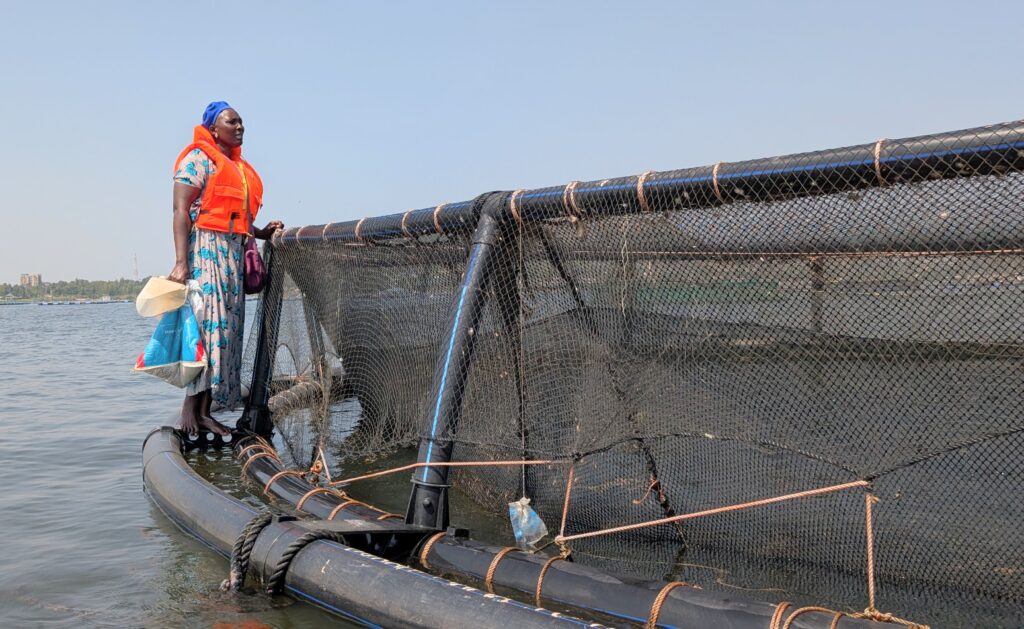
The shift from dependency to ownership has yielded incredible financial results. By breaking the traditional barriers that denied women access to the lake, the group successfully completed one full harvest cycle. During this production phase, the women harvested approximately 6.720 tonnes of tilapia. Proving their capacity to operate at a corporate level, the group successfully secured a market for their produce, selling the entire yield for KES 2,029,400.00.
“Because the initial capital was a loan, we made sure to pay back every shilling of the principal and interest,” Wida notes proudly. “The profits we kept went straight into our table banking to uplift one another, and we immediately reinvested to multiply our stock in the water.”
The Bukani Mama Toto Group is focused on long-term sustainability and continuous growth. Following their highly successful first harvest, the group immediately reinvested in their enterprise by restocking their fish cage with 35,000 tilapia fingerlings in November 2025.
Currently, Wida and her team are meticulously managing their stock as they approach their next major harvest in August 2026. The socio-economic impact on their households has already been profound.
“As we speak today, our children are in class with a zero fee balance,” Wida shares. “Not a single child is being sent home. For the first time, we have a voice and real economic power in this village. We no longer beg; we stand entirely on our own.”
Through the strategic support of the YISA program, the women of Bukani Mama Toto are no longer waiting on the shorelines. They are actively commanding their own economic futures and building a lasting legacy for the next generation.