Stakeholders Unite to Advance Gender-Responsive Electoral Governance Ahead of 2027 General Elections
As Kenya prepares for the 2027 General Elections, key institutions and civil society partners gathered in Nairobi for a national dialogue focused on dismantling systemic barriers to women’s political leadership.
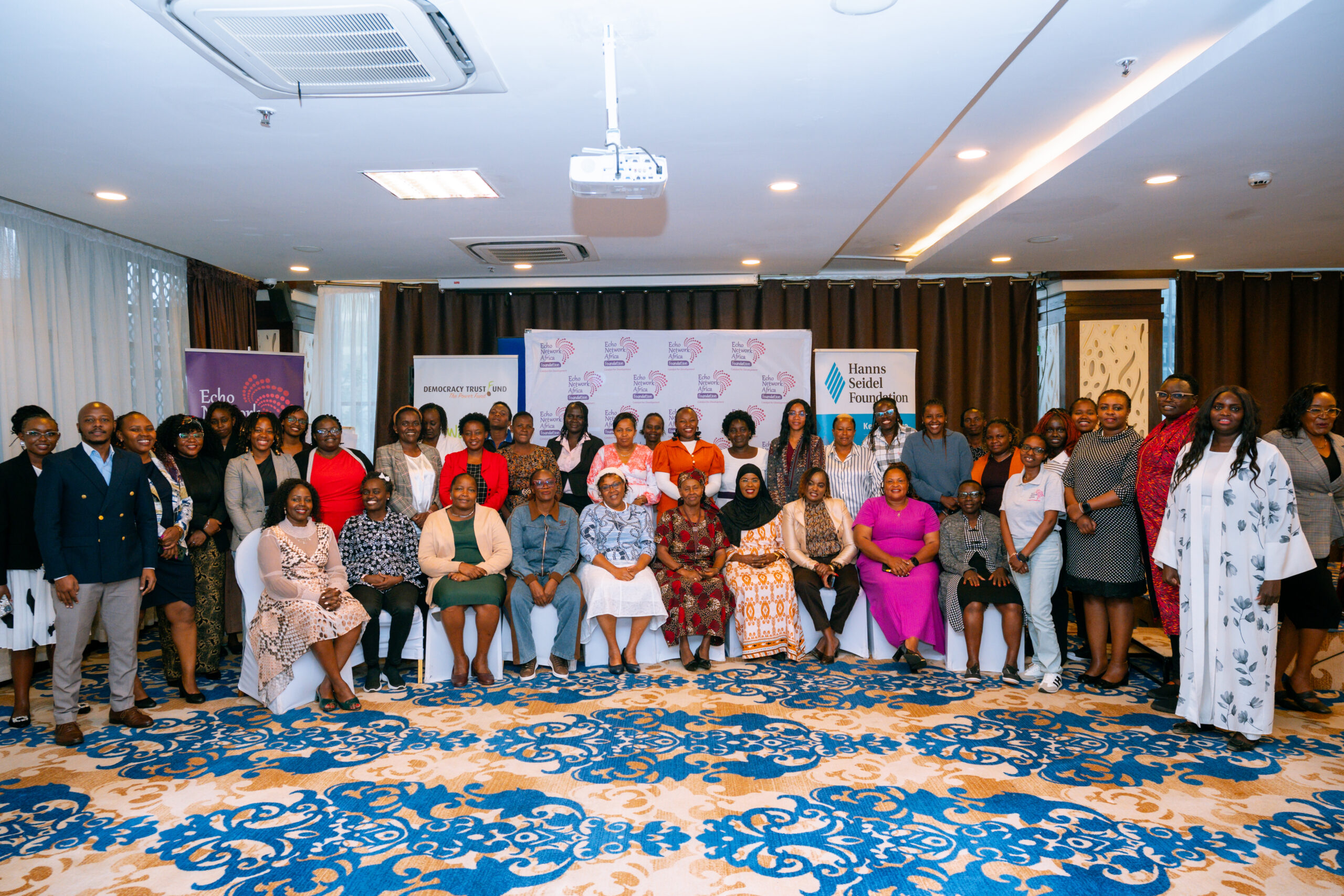
Echo Network Africa Foundation (ENAF), in partnership with the Democracy Trust Fund (DTF) and with support from the Hanns Seidel Foundation (HSF), convened the National Multi-Stakeholder Dialogue and Sensitization Forum on Gender-Responsive Electoral Governance. The high-level forum brought together over 70 representatives from across Kenya’s electoral governance ecosystem to establish concrete strategies for inclusive democratic processes.
Participating state and non-state actors included the Independent Electoral and Boundaries Commission (IEBC), the Office of the Registrar of Political Parties (ORPP), the National Gender and Equality Commission (NGEC), the National Cohesion and Integration Commission (NCIC), the Political Parties Liaison Committee (PPLC), the State Department for Gender and Affirmative Action (SDGAA), and the Political Parties Disputes Tribunal (PPDT). They were joined by representatives from political parties, security agencies, civil society organizations (CSOs), and women’s rights organizations (WROs).
Throughout the deliberations, delegates addressed the persistent structural, financial, and socio-cultural barriers that continue to limit women’s active political participation. The discussions generated actionable recommendations aimed at strengthening the enforcement of existing electoral laws, enhancing party-level compliance with gender parity principles, and safeguarding female candidates throughout the electoral cycle.
Crucially, the forum underscored that achieving true gender responsiveness requires cross-sectoral coordination and shared accountability. The commitments established during the session will serve as a framework for continued advocacy, joint monitoring, and targeted capacity-building. By aligning key institutions behind a unified agenda, the coalition aims to foster an electoral environment that effectively prepares, positions, and supports more women to successfully run for and win elective office in 2027.m, including the Independent Electoral and Boundaries Commission (IEBC), the Office of the Registrar of Political Parties (ORPP), the National Gender and Equality Commission (NGEC), the National Cohesion and Integration Commission (NCIC), the Political Parties Liaison Committee (PPLC), the Political Parties Disputes Tribunal (PPDT), political parties, security agencies, civil society organizations (CSOs), women’s rights organizations (WROs), and other key electoral stakeholders.
The discussions generated practical recommendations to address the persistent barriers limiting women’s political participation, strengthen the implementation and enforcement of electoral laws and policies, and promote more inclusive and gender-responsive electoral governance.
The forum also underscored the importance of stronger coordination and shared accountability among electoral stakeholders. The commitments made will guide continued advocacy and collective action towards creating an electoral environment that prepares, positions, and supports more women to run for and win elective office in the 2027 General Elections.